What should your business be known for?
Ask an established founder what her business should be known for and you will usually get one of two answers.
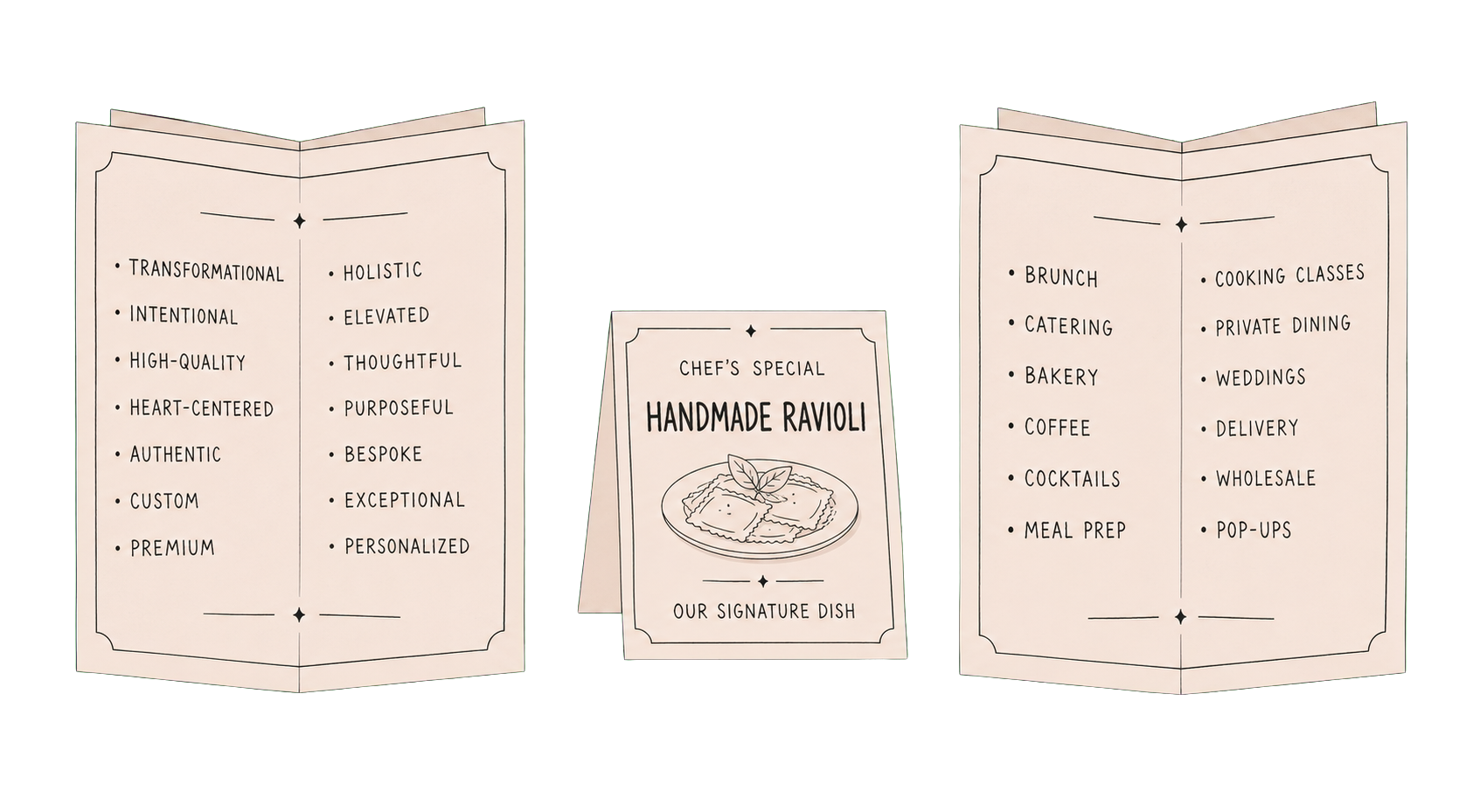
The first contains every good word she has ever entered into a brand workbook.
“We care deeply about people, create transformational experiences, value integrity, offer exceptional quality, and help clients become the best version of themselves.”
The second is basically a Cheesecake Factory menu.
“Strategy, consulting, workshops, speaking, a membership, a podcast, leadership development, and possibly a book next year.”
Both answers may be completely accurate.
Neither gives the market a useful way to remember the business or know when to think of it.
What you should be known for is not a summary of everything you value, know, or sell.
It is the clearest and most useful idea for people to connect to your name.
If you do not choose the category, people will choose one for you
Founders often wait for the market to notice the right thing on its own.
They keep publishing, adding offers, serving clients, sharing stories, and hoping the throughline will eventually become obvious.
Sometimes it does.
More often, the market grabs the easiest available label and keeps moving.

The designer becomes “the logo person.” The therapist becomes known for one modality she barely wants to discuss anymore. The consultant becomes associated with the lowest-level implementation service because that is the clearest page on the website. The founder with a sophisticated body of work becomes “really inspiring.”
It is like a library continuing to file your newest work under the category you belonged in five years ago. The old card is still in the drawer, so every new book gets shoved behind it.
The market is not trying to misunderstand you. It is using the filing system you gave it.
Positioning is the decision to update that system deliberately.
Being known for something does not mean doing only one thing
This is usually where a very capable founder starts to panic.
If I choose one thing to be known for, do I have to abandon everything else? Do I have to flatten 15 years of work into a tiny niche? Am I going to repeat one sentence until I die?
No.
You need an idea that can organize the work, not a cage that makes the work smaller.
Think about the front page of a newspaper. One story leads. Other stories still belong on the page. The lead gives the reader a way in and tells her what matters most right now.
Your business needs the same kind of hierarchy.
The leading idea should help people understand the larger value of the work. Your services, perspectives, audiences, and future offers can live beneath it without all competing to be the headline.
At Liberty Type, “Authority Brand” can hold work for a chiropractor opening a second location, an author preparing for a book launch, an interior designer raising her minimum investment, and a consultant becoming a public voice in her field.
Their industries are different. Their next moves are different. The shared need is this: they have built expertise that the current brand is not making recognizable enough.
That is an idea with room around it.
Start with the intersection, not your favorite adjective
An Authority Brand connects two things:
- What you are uniquely qualified to be known for
- What your market already wants, needs, values, fears, or is trying to become
Both matter.
If you build the position only from what the market wants, you tend to sound like everyone else responding to the same demand.
If you build it only from what feels meaningful to you, you can end up with a deeply authentic position no one understands or wants to buy.
The useful idea lives where your credibility and the market’s desire meet.
This is why “What do you want to talk about?” is not a complete brand-strategy question.
I also want to know what you have seen that other people have not. Which decisions clients trust you to make. What problem keeps appearing beneath their initial request. What they are trying to become. Which part of the work makes them say, “I have been looking for someone who understands this.”
Your position should feel true to you and useful to them.
Look beneath what the client asks to buy
Clients often ask for the visible solution.
“I need a new website.”
“I need a logo.”
“I need to start posting more.”
That is the point where the problem became noticeable. It is not always the point where the problem began.
The website may embarrass her because the business has never decided what should lead. The logo may feel wrong because the identity is still expressing an earlier version of the company. Content may be difficult because there is no central idea helping the founder decide what belongs.
If I positioned Liberty Type only around the requested deliverables, we would be a strategy, copy, design, and Showit website agency.
That is true.
The more useful truth is that we help established experts become easier to recognize as the authority they already are. Strategy, messaging, identity, copy, and the website are how we make that happen.
One version tells you what is delivered.
The other tells you why someone wants it.

Choose the idea that makes decisions easier
A good position should be able to leave the homepage and do some actual work.
It should help you decide:
- Which offers belong
- Which opportunities move the brand forward
- What content to publish
- Which audience should recognize itself first
- What to become better known for
- What to stop emphasizing
- How your team should introduce the business
- What the visual identity needs to communicate
- Which stories belong on the website
- What people should remember after encountering you
If the position cannot guide a single decision, it may be a nice sentence. It is not yet strategy.
This is also a useful way to tell whether an idea is large enough.
The right position should clarify the next chapter without making the business pretend the previous chapters never happened.
The hardest part is deciding what does not lead
Most established founders do not have too little to say.
They have too much.
Every service exists for a reason. Every chapter taught them something. Every idea has a story attached. They can make a persuasive argument for 12 different directions because all 12 contain part of the truth.
This is why choosing what the business should be known for can feel like cleaning out your own junk drawer.

You know why every tiny key, expired coupon, dead battery, and mystery screw is in there. Someone else can look at it and say, “Amanda, this is trash,” with a level of clarity currently unavailable to you.
Editorial judgment is knowing what should lead, what should support it, and what may be true but does not belong in this particular story.
My journalism background is useful here. Reporting taught me that gathering information and deciding what it means are two different jobs. A reporter can return with pages of notes, hours of interviews, and dozens of facts. The reader still needs a clear story.
The same is true of a business.
You bring the archive. I bring the questions, the outside perspective, and the willingness to decide which truth should organize the others.
A simple test for the idea
Before building the brand around a position, ask:
- Is it true now, not only something you hope to grow into?
- Does the right market care about it?
- Is it specific enough for someone to remember?
- Is it large enough to hold the next chapter?
- Does it help you make real decisions?
You do not need a capitalized acronym to work through those questions. You need an honest answer.
If you have been circling several possible positions, rewriting the homepage, or asking ChatGPT for an eighteenth version of the same sentence, the answer is probably not sentence number 18.
You may need someone to help you decide what matters.
Inside my free live masterclass, From respected expert to recognized authority, I explain why experience does not organize itself, why the market often recognizes people with less experience, and what must become clear before visibility can work in your favor.
What Should Your Business Be Known For?
filed under: